
The Brewsters Revive Legacies

A Brooklyn-based family is building an archive of the future in plain sight.
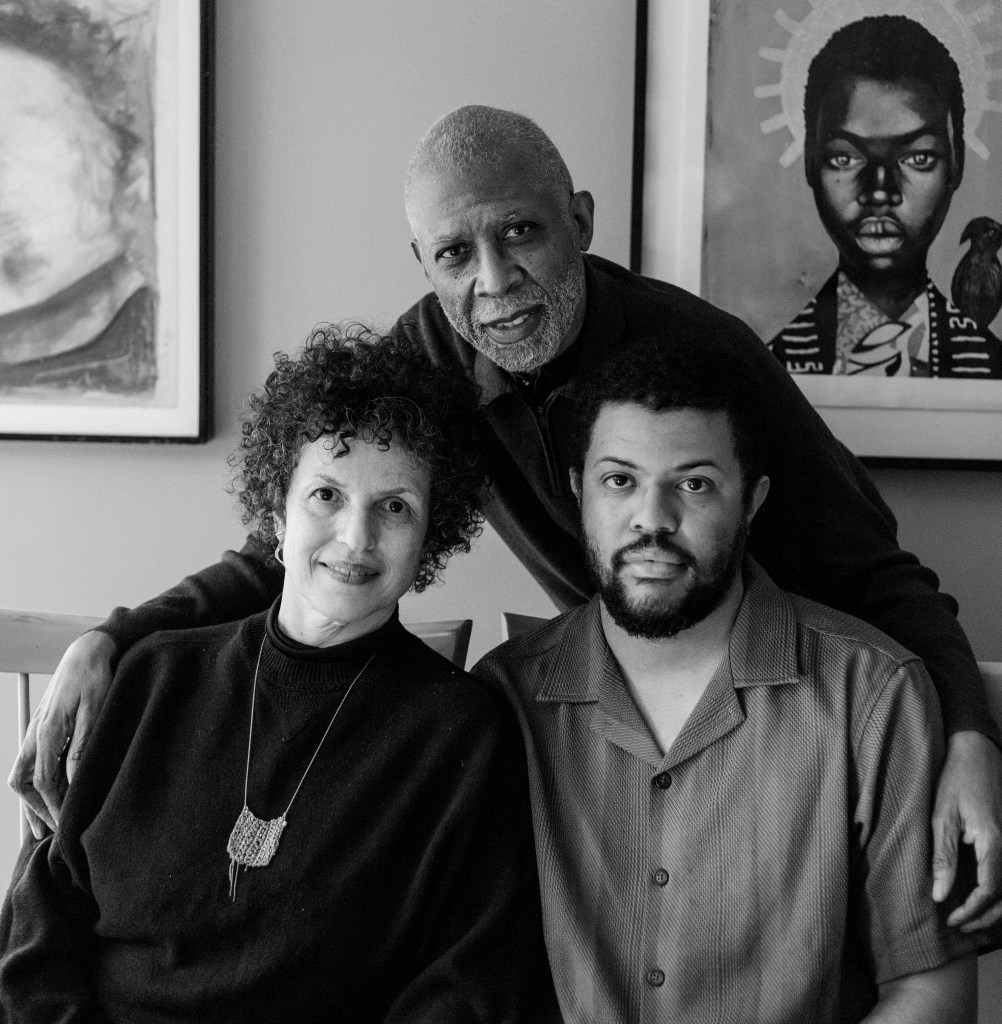
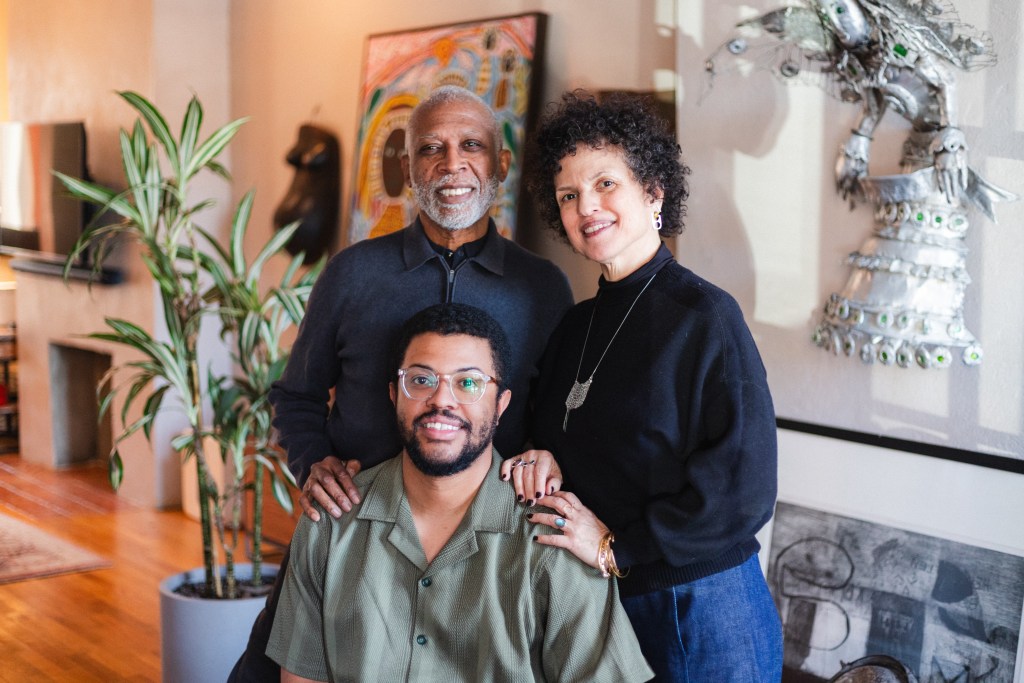
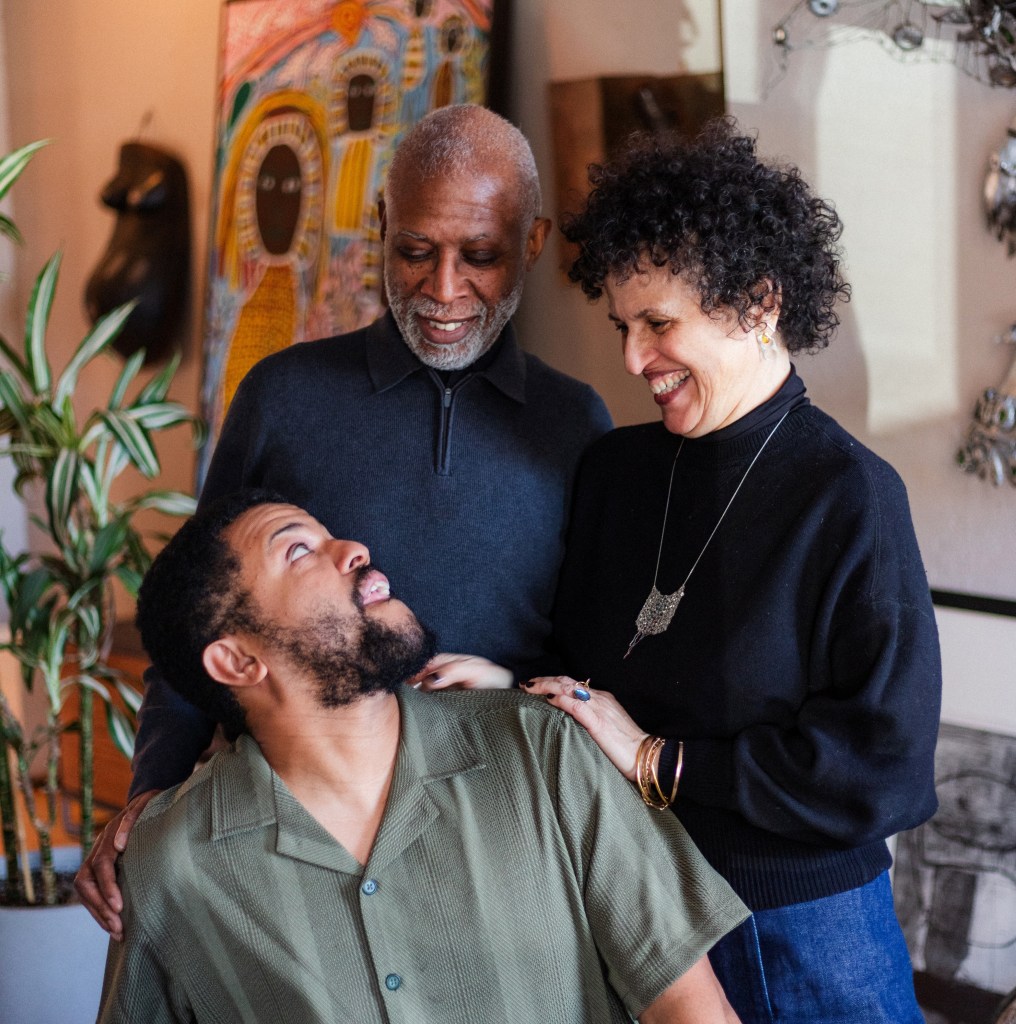
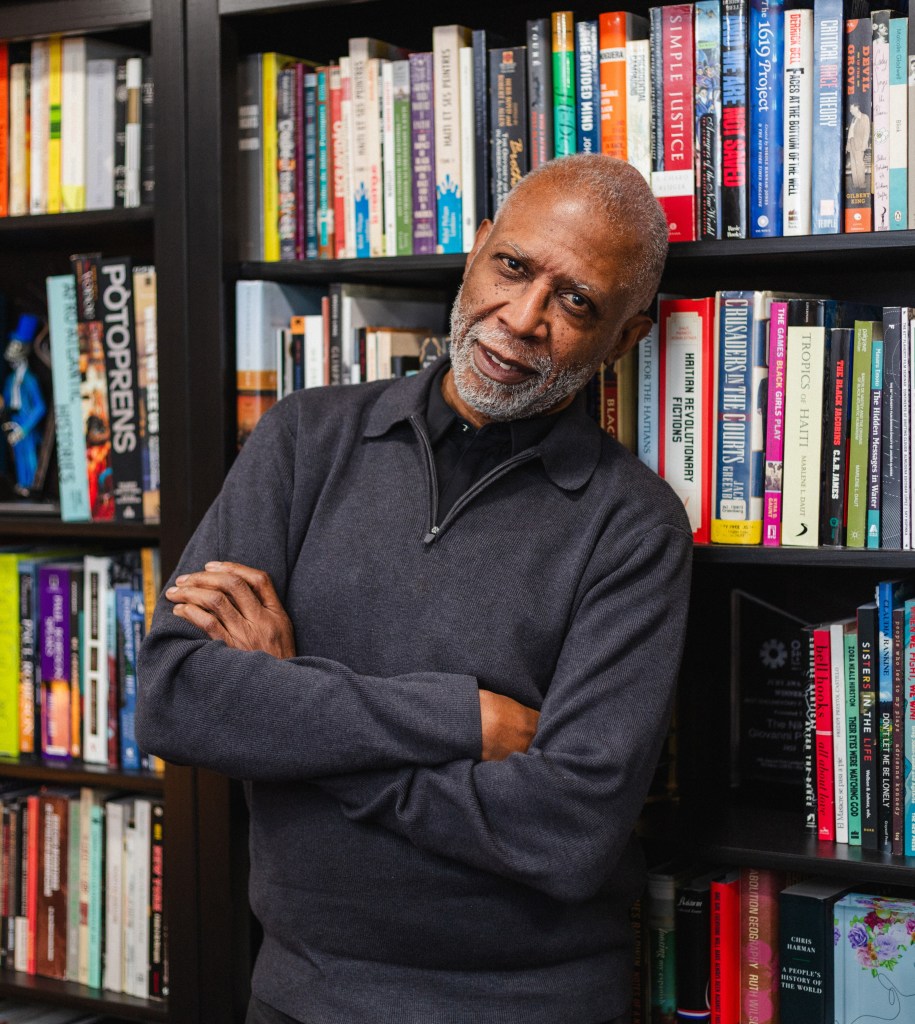
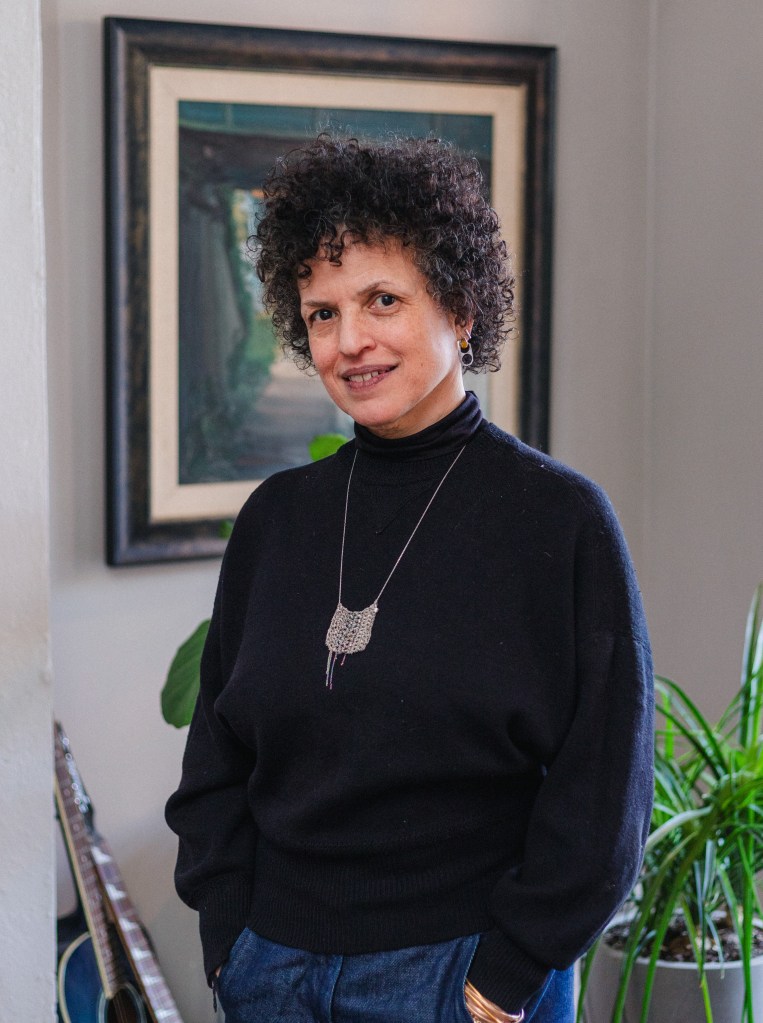
Joe Brewster and Michèle Stephenson have been filmmakers for over thirty years. They focus on communities of color and operate Rada Studio from their home in Fort Greene. In this space, they also raised a family. “[Idris] was a baby when we were doing our first fiction film… crawling on the floor, picking up the scraps.”
Growing up in New York City, Idris wanted to see himself represented in local monuments, archives, and in schools. So in 2018, he left a computer science career to start Kinfolk Tech; an art & technology company creating digital monuments to amplify Black and brown histories.
With a team of ten by his side, Idris is on a mission to empower communities of color through immersive storytelling and public art.
I visited the family in January to learn about their collective work and photograph this moment in time. We spoke about virtual reality, augmented reality, inspiration, the impact they’re making today, and how artists can create projects at this scale.
Read on for a wonderful conversation about crafting a legacy…
“It’s a life mission to have contact with others who have similar obstacles.” – Joe Brewster
Filmmaking and Virtual Reality
Joe: Rada is a progenitor for Kinfolk because there are certain things about our film and our storytelling practice which are evident in his work. We do a deep dive into characters, and that deep dive really is a historical perspective – not only of the people but of the communities that we’re dealing with. For us it’s a healing experience, but also it helps us to recontextualize the world that we’re confronted with through the majority perspective, and it’s a non-black perspective. And it’s a way for us to make sense of the cognitive dissonance of moving through this world. That is what Kinfolk does, and they’ve perfected it.
Michèle: In the evolution of our work, we’ve seen that form is political as well as content. So we’re constantly pushing the form. I think with American Promise, it was about digging deep into observational work and how we can really master that, but from an unapologetic, Black, middle-class perspective. We’ve taken that further – we’ve always been interested in immersive from pretty early on because of the lack of diverse voices bringing in perspectives.
Joe: We were also approached by Sundance who was concerned that most of the makers in the immersive world were…
Michèle: White, male, cis…
Joe: So they brought us to Park City to immerse ourselves in the art of making those stories… we had work that was emotionally resonant and so we were trained to make VR.
Michèle: The wanting to work with VR was also because we knew we needed to lay a stake on the ground and give our perspective in that space as well and push ourselves as artists in terms of the form.
Virtual reality and augmented reality are community-building tools to create memory and preserve memory of historic figures being wiped from collective consciousness.
With Kinfolk, Idris is bringing this history to the forefront of culture by working with artists, archivists, creative technologists, historians, and elders to protect and build upon these stories.
Digital Monuments
In June 2025, Joe, Michèle and Idris worked together to create “There Goes Nikki,” an immersive AR memorial honoring the poet and activist Nikki Giovanni. Their installation featured Giovanni’s poem, “Quilting the Black-eyed Pea (We’re Going to Mars)” as part of Tribeca Festival’s immersive programming.
This is where I first discovered the family’s work. Additionally, Joe and Michèle produced the documentary ‘Going to Mars: The Nikki Giovanni Project,’ available to watch on HBO Max.

Last summer, Idris also unveiled “Dreaming with the Archives,” a Brooklyn Bridge Park activation transforming the landscape with augmented reality by placing digital monuments around the waterfront.
Through the Kinfolk App, visitors experienced site-specific, immersive artworks that brought to life the sounds, flora, fauna, agriculture, and skilled laborers – enslaved and free – who make up the history and ecology of Brooklyn and the African diaspora.
Then in October, Idris and his team produced “KIN: A Festival of Memory and Imagination,” a three-day program at Water Street Arts to showcase more immersive installations and interactive experiences.
One of the exhibits “For Those Who Come After” was a James Baldwin Typewriter experience in partnership with the estate. It recently won Columbia University’s Digital Storytelling Lab 2026’s Breakthroughs in Storytelling Award.

Public programming is core to Kinfolk’s mission, and these partnerships were forged through long-term relationships and generational introductions. Key collaborators include Karen Wong, Hank Willis Thomas, Errol King, Wendy Schmidt and Chip Giller. A network of networks effect.
“Kinfolk has established a whole new way of making community history visible. Through immersive storytelling, and with care and craft, it lifts up cultural narratives that have too often been pushed aside. Agog is proud to support Kinfolk’s work and to help illuminate stories that deepen our collective understanding of the past and the communities that shaped it.” – Chip Giller, Cofounder and Executive Director, Agog
Idris: The power of organizations, or institutions, or collectives are the people that they have engaging with them… For partnerships, the goal of it is to really bring in the communities of these different folks into a space where we can organize and exchange information and be across communities. Hopefully art can leave folks inspired and also connected… creating in-person, analog spaces can really help people on their journey to be better selves and better community members.
How did Idris decide to focus on “digital monuments” in the first place?
Idris: In the 200+ monuments that have been taken down, only five were taken down before 2015… There was a reckoning happening at that moment in time with our history and our symbols, so we wanted to show what this could look like if we could put up our own monument… Centering communities of color and empowering them to tell their stories really allowed us to dig into what was necessary and what was needed. Knowing history is really a guide about making better informed decisions about today.
Joe: The desire to create memory and find some sort of marker that was less expensive than a trillion dollars worth of statues… That is ubiquitous, it’s everywhere, and it’s a need.
Kinfolk is able to create immersive installations and activations that are beautiful while still communicating an important message. Art doesn’t need to make a viewer comfortable, so I was curious about the family’s view on balancing serious subject matter with aesthetic presentations.
Making “Beautiful” Art
Michèle: I think this kind of engagement and success always starts with the beautiful art, beautiful story… It’s about centering the art form and its beauty and its potential for impact. It’s like the drawings in the caves, there was a beauty to it that was almost a spiritual element, you know, but the idea that you are transcending, through the beauty of the work, the beauty of what you see that hits people emotionally, and then the ripple effect of engagement happens from there.
Joe: You can trip yourself up by talking about beauty without defining it. I see beauty as an emotional connection with the work. It stimulates the hippocampus, the limbic system, and that is inspirational. It’s not just pleasing to the eye, it’s pleasing to the soul. So you want to get back, you want more of it, and sometimes it’s cross eyed… We can’t be so linear in our understanding and concrete in how the public ingests this information and spreads it. It is a multiplier effect, and that is what we assume is part of the process of the art that we do.
Michèle: Our work not only is excavating invisiblized archive or stories… but the actual work itself becomes an important archive for future generations… It’s “what is it that we’re doing that will be an archive of the future?”… When people come in 50 or 60 years, or the indigenous people talk about seven generations, what will they find behind that they can either appreciate or better understand about themselves… When I’m looking for inspiration for the work I want to do… I’m looking for who is it that has a similar perspective that I have, who was a pioneer in this thing who maybe was forgotten. That is what inspires me.
As a final question, I asked Idris, Joe and Michèle for advice to artists, activists, and creative people who want to make important work at a large scale.

Words of Wisdom
Joe: It really requires reading and getting to know people… my leaving medical school and hitchhiking across south america for six months changed my life, and my values. So one of the first thing I think they need to do is get to know the world outside their family, and partially by reading but just hands on goes along way to take in that craft and be able to hone it on people.
Michèle: Whatever it is, you gotta be invested in it because it’s gonna cost time and money. And personal investment. It’s hard not to sound cliché about it, in terms of the level of conviction and investment in whatever it is you undertake, but I think it’s both having an investment in either a particular story, or form, or project that starts small. But the key is building the community around that. And the trust. Because you look at – we went through all of these different connections that Idris has or developed – they didn’t come out of nowhere. They came from intentional community building that he did, but also that were passed on from others, too.
Joe: It’s generational.
Michèle: Generational trust. But there’s the peer-to-peer trust and then there’s the mentorship trust. Another important thing is finding a strong mentor. I don’t think we would be where we are without the mentors who sort of helped pave the way for us.
Idris: No matter what you’re doing, be invested in your self-learning journey and look for inspiration in a bunch of places. You have to question everything you’re reading, everything you’re seeing, and really learn how to trust yourself and your opinion. I think that’s an ever-evolving journey. And experimenting in many different forms of media is important. I’m stone carving now, and that’s something I would’ve never thought I would be trying to do like five, or even three years ago. [If] you stay in one medium and just focus on that, I think you’re missing other experiences that could really inform that media. And I feel like the future of art is really interdisciplinary in approach.
Michèle: If we’re willing to be open to experimentation, crazy things can happen. To see the abyss or the uncertainty of the future as opportunity for reinvention is really key. And I go back to the surrealists of the 1920s to the 1940s who were living through very similar crises moment… and they were thinking about dreams, and what those dreams meant from a political perspective. And how to interpret those dreams both on film and on the canvas that I think left a lot of marks, or certainly a lot of references for makers today. So thinking about this moment from a historical perspective – what can we learn from similar moments in terms of what artists were doing. They were very much in community.
Idris: Also learn in public and engage and talk to people about your work. Don’t be afraid of the public sphere. That’s how work gets seen and the key to a successful career… is the communities and the relationships that you build. Clearly, it’s what got me to where I am. And also, it’s not just me. There’s a team of ten people at Kinfolk, and working with those people over six to seven years, continually, has just made our work even better and allows us to do more… That is also the key to building something larger is having a continued team that you have rapport with that allows you to do things quicker, and more expansively… There is power once we organize and come together. And so I’m interested in what are the spaces that we can create intentionally with each other, especially over these next three years. It’s the era of quietly building, and organizing, and imagining what can be.
2026…
As we approach the 250th anniversary of America, Idris is focused on confronting narratives that paint an inaccurate picture of our history. At Kinfolk Tech, they want audiences to understand the multitude of voices that had to do with the creation of America and where we are today.
To learn about upcoming experiences, visit kinfolktech.org/exhibitions and follow @kinfolktech to see augmented reality around New York City, watch their “History Starts at Home” series, attend KIN Festival this summer, sign up for workshops, and help build the archive of the future.
To keep up with Joe and Michèle, visit radastudio.org and follow @radastudionyc.
Elliott covers artists and public programming. Have a project coming up? Share what you’re working on:


Visit elliottdesai.com for additional offerings.
